


Nighttime maritime security needs the best tools. You deal with darkness, bad weather, and sudden dangers. Thermal PTZ cameras often work better than optical cameras. They find heat, see in total darkness, and handle tough conditions. Recent reports show more nighttime problems:
- Global piracy cases went up by 50% in early 2025.
- The Singapore Strait had over 70 cases in 2025.
- Crew kidnappings in the Gulf of Guinea were 87% of all cases.
You need good surveillance. A Maritime Thermal PTZ Camera uses infrared to find heat. Optical cameras use visible light. When picking a camera, think about detection range, image quality, weather resistance, price, and your needs.
| Feature | Thermal PTZ Cameras | Optical Cameras |
|---|---|---|
| Light Requirement | Work in low-light or no-light | Need light |
| Detection Capability | Find heat, work in total darkness | Lighting affects them |
| Weather Adaptability | Not bothered by glare or fog | Poor visibility affects them |
Key Takeaways
Thermal PTZ cameras work very well in complete darkness. This makes them great for nighttime maritime security. These cameras find heat, so they can see through fog, rain, and smoke. This helps them give good surveillance even in bad weather. Optical cameras are best when it is bright. They give clear pictures but have trouble in low light or darkness. For the best coverage, use both thermal and optical cameras together. This helps you get better detection and more details. Think about your needs, your budget, and the weather before you pick a camera for your maritime security.
Best Choice for Nighttime Maritime Security
Summary and Justification
You want a camera that works well at night on the water. Most of the time, a Maritime Thermal PTZ Camera is the best pick. This camera uses infrared to find heat, so it works even when it is very dark. You do not have to worry about bad weather or no light. The camera can see through fog, rain, and smoke. It finds people or things by their heat, not by how they look. This helps you spot danger or problems faster and with fewer mistakes.
- Thermal PTZ cameras work in low light and total darkness.
- They use infrared to make pictures, so you can see when it is dark.
- These cameras keep working in fog, smoke, and rain.
- Thermal imaging shows heat, so you can find hidden people or things.
- You get fewer false alarms because the camera looks for heat, not just movement or light changes.
People who work in maritime security trust these cameras at night and in tough weather. Optical cameras can help sometimes, but they need light to work well. If you want clear pictures in darkness or storms, a Maritime Thermal PTZ Camera is usually better.
When Each Camera Excels
It is important to know when to use each camera. Both types are good, but they work best in different ways.
- Use a Maritime Thermal PTZ Camera when you need to see in total darkness. This camera helps you find people in the water, even if they are far away. It works well in fog, rain, and smoke. You can use it for search and rescue or to spot danger at night.
- Pick an optical camera if you work where there is a lot of light. Optical cameras give you sharp, colorful pictures when it is bright. They help you see faces, read numbers, and spot small details during the day or in bright places.
Here is a simple chart to help you choose:
| Feature | Maritime Thermal PTZ Camera | Optical Camera |
|---|---|---|
| Visibility in Darkness | Works in total darkness | Needs some light |
| Weather Resistance | Unaffected by fog, rain, or smoke | Loses clarity in bad weather |
| Clarity in Low Light | Shows clear heat signatures | Image quality drops in low light |
| Detail in Good Light | Less detail than optical | High detail in good lighting |
| Search and Rescue | Finds people by heat in water or fog | Hard to see in darkness or glare |
You get the best results when you pick the right camera for your needs. For most nighttime jobs on the water, a Maritime Thermal PTZ Camera gives you an advantage. If you work in a bright port, an optical camera can help you see details. Many people use both cameras together for the best coverage.
Camera Technologies Overview
How Thermal PTZ Cameras Work
You can rely on a Maritime Thermal PTZ Camera to see in the dark. This camera does not need light to work. It uses special sensors to detect heat from objects, people, or vessels. Every object gives off some heat, even at night. The camera picks up this heat and turns it into a picture you can see.
- Infrared sensor: Finds heat from objects.
- Optics and lens: Focus the heat onto the sensor for a clear image.
- Image processor: Changes the heat data into a picture that shows temperature differences.
- Thermal imaging sensor: Turns the heat into signals the camera can use.
You get a clear view, even in total darkness, fog, or smoke. The camera does not care if it is sunny or stormy. You can spot people in the water or small boats far away. This technology helps you keep watch all night and in bad weather.
Tip: You do not need extra lights for a Maritime Thermal PTZ Camera. It works by finding heat, not by using visible light.
How Optical Cameras Work
Optical cameras use visible light to make pictures. You see what the camera sees, just like your eyes. These cameras work best when there is plenty of light, such as during the day or in well-lit areas. They show colors and fine details, which helps you identify faces, read numbers, or spot small objects.
| Component/Function | Description |
|---|---|
| Extreme Long-Range Imaging | Lets you see far with lots of detail in good conditions. |
| Environmental Design | Protects the camera from rain, salt, and harsh weather. |
| VTMS Integration | Connects with vessel tracking systems for better monitoring. |
| Slew-to-cue & Auto Tracking | Follows moving targets automatically using radar data. |
| Gyro Stabilization | Keeps the image steady, even if the ship moves. |
| 360-degree PTZ Capability | Lets you look all around with no blind spots. |
| Special Imaging Options | Offers different modes for different weather and lighting. |
You get the best results from optical cameras in bright light. At night or in fog, these cameras may not see as well. You can use them to check details during the day or in ports with good lighting.
Maritime Thermal PTZ Camera Advantages
Nighttime Detection Range
It is important to see threats at night on the water. A Maritime Thermal PTZ Camera helps you do this well. You do not need extra lights for it to work. You can watch your area all day and night. The camera finds body heat, so you can spot hidden dangers in the dark. The pictures have strong contrast, which makes it easier to see targets and use video tools.
Here is a table that shows the main advantages:
| Advantage | Description |
|---|---|
| Operates effectively day and night | Works without extra lights, so it is good for nighttime watching. |
| Detects body heat | Finds hidden dangers in total darkness, which helps in low-visibility. |
| High-contrast images | Makes video tools and target spotting better, which is important for watching. |
| Extreme weather reliability | Keeps working in tough weather like fog, smoke, and rain, so you always have coverage. |
| Long-range heat signature detection | Spots things far away, which helps protect your area and find threats early. |
Note: You can trust a Maritime Thermal PTZ Camera to find people or boats far from your ship. This helps you keep your area safe and act fast if there is a problem.
Performance in Adverse Weather
Weather at sea can be hard to deal with. Fog, rain, and smoke make it tough for normal cameras to see. A Maritime Thermal PTZ Camera uses heat, so light does not bother it. You can still see things when it is hard to see. The camera works best when objects are much warmer or cooler than the background. Fog does not block thermal radiation, but it can change what the camera sees. You get the best results when the temperature difference is big.
Thermal PTZ cameras give you good coverage in bad weather. You can watch your area even when other cameras cannot see well. This helps you keep your crew and things safe, no matter what the weather is like.
Optical Camera Strengths and Limitations
Image Clarity and Detail
When you watch a ship or port, you want to see everything. Optical cameras give you bright and clear pictures. These cameras help you see faces and read numbers. You can also notice small things that change around you. You can zoom in to see things far away or close up. This helps you follow boats or people as they move.
Here is a table that shows how optical cameras help you see better:
| Feature | Description |
|---|---|
| Continuous Zoom Capability | Lets you capture clear images of both distant and nearby targets. |
| High-Definition Imaging Quality | Gives you stable, sharp images even in busy marine environments. |
| Fog Penetration Function | Keeps images clear during foggy or bad weather, which is important for accurate monitoring. |
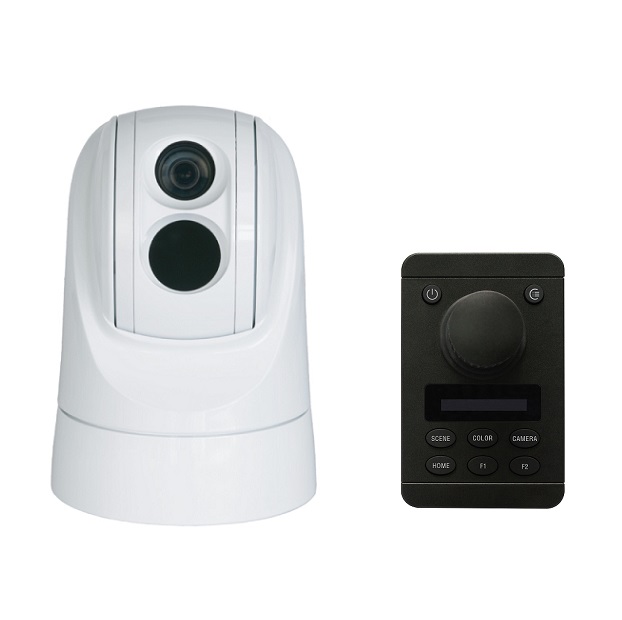
These features help you keep your area safe. If you use a Marine Control Keyboard, you can move the camera easily and change views fast. Some brands like winsafecctv make cameras with these special features for ships and ports.
Low-Light and Night Vision Capabilities
Optical cameras have some problems at night or in low light. These cameras need at least a little bit of light to work. If it is very dark, you might not see much. Bright lights from ships or ports can also make it hard to see.
Thermal imaging cameras can see in total darkness and through light fog, light rain, and snow. But regular night-vision cameras need some light to make a picture, which is hard when there are bright lights everywhere.
Some optical cameras have special night vision features. These features help you see better at night, but they still need some light. If you want to see in total darkness, you should use a Thermal PTZ Camera or a Maritime Dual PTZ Camera with both thermal and optical sensors. You get the best results when you use both types together in a Marine Thermal Imagging System.
Tip: For the best view at night, use both optical cameras and thermal imaging. This way, you get clear details and strong detection in all kinds of weather.
Cost and Maintenance Factors
Initial Investment
When picking a camera for ship safety, you should think about cost. Thermal PTZ Cameras usually cost more than optical cameras at first. They are more expensive because they use special sensors and new technology. But you get more value since thermal cameras work in total darkness. You do not need to buy extra lights, so you save money on power.
Thermal imaging works without needing extra lights. You do not have to worry about glare. This makes it easier to set up and can lower your setup costs. You also get better long-range detection, which helps keep your ship or port safe.
Here is a quick comparison:
| Feature | Thermal PTZ Cameras | Optical Cameras |
|---|---|---|
| Performance in Low Light | Excellent performance in low light and poor visibility | Limited performance in low light |
| Detection Capability | Can detect human activity through visual camouflage | Struggles with camouflage |
| Installation Needs | Reduced installation requirements | More complex installation |
| False Alarm Reduction | Bundled with smart sensors to reduce false alarms | Typically higher false alarm rates |
Some thermal cameras, like those from winsafecctv, have smart features. These features help stop false alarms and save you money.
Tip: If you want both types of cameras, try a Maritime Dual PTZ Camera. This camera uses both thermal and optical sensors for full coverage.
Maintenance and Lifespan
You want your cameras to last a long time at sea. Thermal PTZ Cameras often last 5 to 10 years if you take care of them. Some models, like the M9, use strong materials and special coolers. These parts help the camera fight off saltwater and strong shaking from rough seas.
-
Thermal PTZ Cameras:
- Last 5 to 10 years with good care
- Strong materials handle tough sea weather
- No need for extra lights means fewer things to fix
-
Optical Cameras:
- May need more cleaning and repairs
- Sensitive to salt, water, and weather changes
If you use a Marine Control Keyboard or a Marine Thermal Imagging System, you can control your cameras easily. Regular checks and cleaning help both types of cameras last longer and work better.
Note: Buying good cameras and taking care of them keeps your ship safe and your cameras working well.
Real-World Maritime Use Cases
Thermal PTZ Camera Applications
A Maritime Thermal PTZ Camera is useful for many jobs at sea. It helps you find small boats and stop illegal things from happening near the coast. The M11 camera is good for watching the coast. It can spot things more than 20 km away and tell what they are at over 5 km. Gyro-stabilization keeps the picture steady, even if the water is rough. Wipers clean off saltwater and dirt from the lens. You can link the camera to radar or AIS to see more. Many ports and coastlines use these cameras to keep their waters safe.
- Find small boats and stop illegal actions
- Keep the view clear with wipers and gyro-stabilization
- Connect with radar or AIS for better watching
- Spot targets far away
Optical Camera Applications
Optical cameras help you see details and know what kind of ship you see. You can use deep learning to make coastal watching better. These cameras work best when it is bright and help you read numbers or see faces. The table below shows how people use them:
| Application | Description |
|---|---|
| Ship Classification | Uses optical cameras and deep learning for coastal surveillance |
| FLIR Maritime Imaging | Gives you a view in darkness, glare, fog, and smoke for navigation |
| SCCI Maritime Video | Uses AI for real-time data collection to boost security |
| FLIR Ocean Scout Pro II | A thermal monocular for law enforcement in marine environments |
You can use a Marine Control Keyboard to move the camera and change what you see fast. Brands like winsafecctv make these tools for ports and ships.
Combining Both Technologies
You get the best results when you use both thermal PTZ and optical cameras together. A Maritime Dual PTZ Camera has both sensors in one device. You can watch big areas, even when it is hard to see. The thermal camera finds people or cars up to 30 km away. You can watch ship traffic and keep port areas safe. A Marine Thermal Imaging System lets you control and see both camera types at the same time. This setup helps you find danger in the dark and see details when it is bright. You make your security better and have fewer blind spots.
Tip: Using both camera types helps you find threats and see details in any weather or light.
You get the best nighttime security with a Thermal PTZ Camera. This camera finds heat, works in darkness, and handles bad weather. Optical cameras let you see details when it is bright. For full coverage, use a Maritime Dual PTZ Camera or a Marine Thermal Imagging System from winsafecctv.
- Think about what you need and how far you must see.
- Pick the sensor type that fits your budget and if you need to check pictures.
- Look at the weather and how the camera connects to other systems.
- Check the features, how to set it up, and the warranty.
Make sure you know your needs before you choose. You keep your crew and things safe when you pick the right camera.
FAQ
What is the main difference between a Thermal PTZ Camera and an optical camera?
A Thermal PTZ Camera finds heat. An optical camera sees with visible light. You can use a thermal camera when it is very dark or foggy. An optical camera needs some light to work well.
Can you use both camera types together for better security?
Yes, you can use both types together. A Maritime Dual PTZ Camera or a Marine Thermal Imagging System has both sensors. You get good detection at night and clear pictures during the day.
How do you control these cameras on a ship?
You can use a Marine Control Keyboard. This tool lets you move the camera, zoom in, and change views fast. It works with both thermal and optical cameras.
Does weather affect camera performance?
Weather can make it hard for optical cameras to see. Fog, rain, and smoke block visible light. A Thermal PTZ Camera works better in bad weather because it finds heat, not light.
Which brand offers reliable maritime security cameras?
winsafecctv makes strong cameras for ships and ports. You can get Maritime Dual PTZ Cameras, Thermal PTZ Cameras, and Marine Thermal Imagging Systems from this brand.



 +8613725587481
 sales@winsafecctv.com