


You want the best camera solution for maritime operations. The Maritime Dual PTZ Camera often delivers superior results when you require both visual and thermal imaging. Performance varies based on your vessel, environment, and operational needs.
Comparing features and use cases helps you pinpoint the right choice for your situation.
-
Evaluate your vessel type and typical conditions.
-
Use this guide to select the camera system that fits your requirements.
Key Takeaways
-
Choose a maritime dual PTZ camera for both visual and thermal imaging. This option provides flexibility for day and night operations.
-
Thermal cameras excel in low-light conditions, detecting heat signatures even in fog or darkness. They enhance safety during emergencies.
-
Evaluate your vessel type and typical conditions before selecting a camera system. Matching the camera to your needs improves safety and efficiency.
-
Invest in rugged, weatherproof cameras to ensure reliable performance in harsh marine environments. Durability is key for long-term use.
-
Consider your budget when selecting a camera. Higher-end systems offer advanced features, but affordable options can meet basic surveillance needs.
Comparison Overview
Key Differences
When you compare camera systems for maritime use, you notice clear distinctions between the main types. The maritime dual ptz camera combines both optical and thermal imaging in one unit. This design gives you flexibility for day and night operations. In contrast, thermal cameras focus solely on detecting heat signatures, which makes them powerful in total darkness or through visual obstructions.
Here is a table that summarizes the main differences in imaging and low-light performance:
|
Feature / Aspect |
Single Payload Camera |
Dual Payload Camera |
|---|---|---|
|
Imaging Types |
Optical only |
Optical and Thermal |
|
Night Vision |
Infrared lamps, limited range |
Thermal imaging, full darkness |
|
Low-Light Performance |
Limited |
Enhanced |
You gain a significant advantage with dual imaging. You can switch between optical and thermal views, which helps you adapt to changing conditions at sea. Thermal cameras, on the other hand, excel when you need to detect heat sources in environments where visible light is scarce or blocked.
Performance Summary
You want a camera that performs reliably in all maritime conditions. Thermal cameras stand out in situations with poor visibility, such as fog, sea spray, or nighttime. They detect and track vessels, swimmers, and potential threats even when your eyes or standard cameras cannot see clearly. Their ability to penetrate obscurants gives you enhanced situational awareness and safety.
A high-definition visible camera provides crisp identification during daylight hours. However, its performance drops in low-light or obscured conditions. Thermal cameras maintain their detection capabilities regardless of lighting, which makes them essential for search and rescue, security, and navigation in challenging environments.
Consider this summary of camera performance in maritime scenarios:
|
Feature |
Description |
|---|---|
|
Camera Type |
HD Visible Network Short Range PTZ Thermal Camera |
|
Detection Capabilities |
Detects and tracks vessels, swimmers, and potential threats in challenging environments |
|
Environmental Conditions |
Effective in fog, sea spray, and low-light conditions |
|
Thermal Camera |
Penetrates obscurants for enhanced visibility |
|
HD Visible Camera |
Provides identification during daylight hours |
|
Design |
Rugged, IP66-rated weatherproof housing, MIL-STD-810G salt/fog resistance |
Tip: If you operate in areas with frequent fog, darkness, or unpredictable weather, thermal cameras give you a clear edge. For vessels that require both identification and detection, a dual imaging system offers the best of both worlds.
You should match your camera choice to your vessel’s mission and the typical conditions you face. The right system improves safety, efficiency, and response time on the water.
Maritime Dual PTZ Camera Features
Dual Imaging Benefits
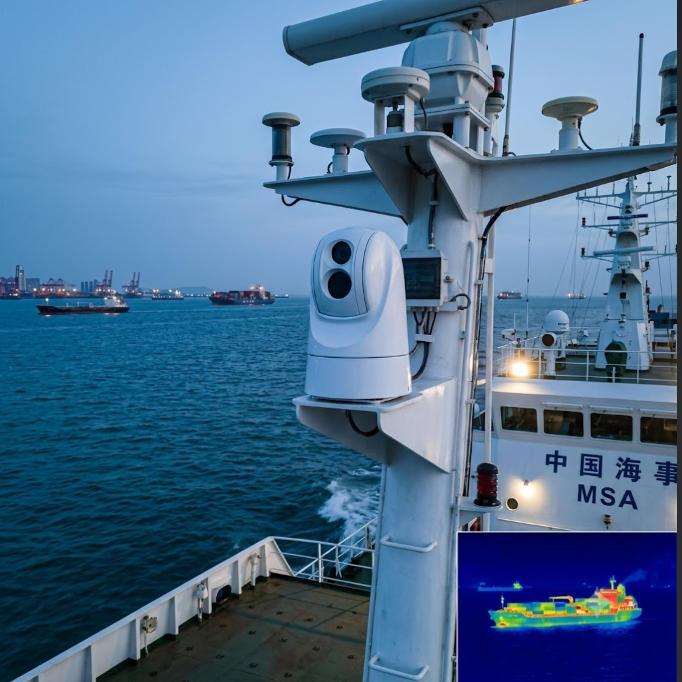
You gain a distinct advantage when you choose a maritime dual ptz camera for your vessel. Dual imaging technology combines thermal and daylight sensors, allowing you to see clearly in total darkness, dense fog, or bright sunlight. You can switch between thermal and visible modes using a marine control keyboard, which streamlines your workflow and improves response time. High-resolution thermal cores, such as 640x480 or 384x288, deliver crisp images that help you identify objects and threats even when visibility drops.
Take a look at the most important features and their benefits:
|
Feature |
Benefit |
|---|---|
|
Thermal and Daylight Imaging |
Allows visibility in total darkness, fog, or bright sunlight. |
|
High-Resolution Thermal Core |
Provides clear imaging with resolutions like 640x480 or 384x288. |
|
30x Optical Zoom |
Enhances detail in visible imaging for better situational awareness. |
|
Ruggedized Aluminum Housing |
Ensures durability in harsh marine environments with an IP67 rating. |
|
Marine Control Keyboard |
Facilitates easy switching between thermal and visible modes. |
|
Advanced Tracking |
Offers radar and video tracking for improved navigation and security. |
|
Suitable for Various Vessels |
Ideal for large yachts, commercial ships, and patrol vessels. |
Note: Dual imaging gives you flexibility to adapt to changing conditions at sea. You can monitor your surroundings with confidence, regardless of the time of day or weather.
Situational Awareness
A maritime dual ptz camera enhances your situational awareness by providing advanced tracking and zoom capabilities. You can detect and track vessels, swimmers, or potential threats over long distances. The latest models, such as the m7 PTZ Flir, feature continuous wide to telephoto optical thermal zoom lenses with detection ranges up to 20 km. The MX5 camera offers both thermal and optical video outputs, along with a high-quality day/night core and 500X total zoom.
-
You monitor borders and open water with ease.
-
You maintain security and safety during low-light or challenging weather.
-
You operate confidently on large yachts, commercial ships, and patrol vessels.
Thermal imaging remains essential for border surveillance and navigation. You rely on the maritime dual ptz camera to deliver clear images and reliable performance in harsh marine environments. Ruggedized aluminum housing with IP67 ratings ensures durability, even when exposed to salt, fog, or rough seas.
Tip: You improve your vessel’s safety and operational efficiency by investing in a maritime dual ptz camera with advanced imaging and tracking features.
Thermal Cameras in Maritime Use
Low-Light Performance
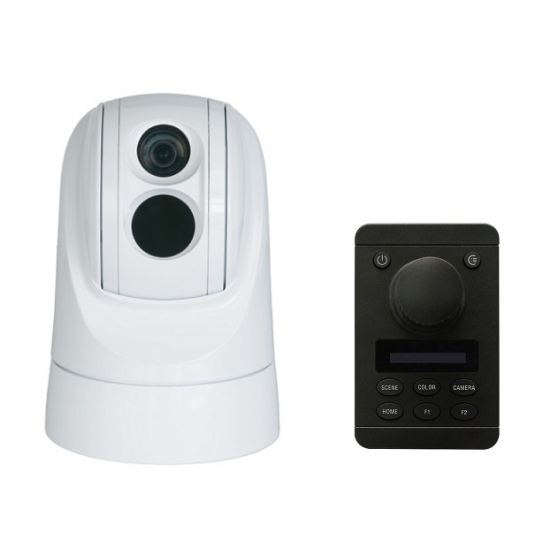
You rely on thermal cameras when visibility drops. These cameras operate in total darkness, fog, smoke, and rain. Unlike optical cameras, thermal cameras do not depend on ambient light. You gain the ability to monitor your vessel’s surroundings at any hour. The technology detects heat signatures from people, boats, and animals, making it possible to spot hazards that remain invisible to the naked eye.
Consider the following comparison:
|
Camera Type |
Performance in Low Light |
Additional Features |
|---|---|---|
|
Thermal PTZ Camera |
Excellent |
Operates in total darkness, fog, smoke, rain |
|
Optical Camera |
Poor |
Requires light for effective operation |
You enhance safety during emergencies, such as man overboard incidents, by using thermal cameras. These cameras reveal hidden hazards and floating objects, including ice, in any lighting condition. You gain 24/7 monitoring capabilities for public safety and natural resources. Thermal cameras provide an added margin of safety when navigating at night, helping you avoid collisions with debris and other obstacles.
Challenging Conditions
Thermal cameras excel in harsh maritime environments. You benefit from gyrostabilized technology, which delivers stable imaging even in rough seas. Hermetic sealing protects the camera from saltwater, spray, and corrosive elements. Long-wave infrared systems withstand temperature fluctuations, ensuring reliable operation.
|
Advancement Type |
Description |
|---|---|
|
Gyrostabilized Technology |
Offers enhanced capabilities for navigation and surveillance, providing stable thermal imaging even in rough conditions. |
|
Hermetic Sealing |
Protects against harsh marine elements, extending the lifespan and performance of thermal cameras. |
|
Long-Wave Infrared Systems |
Engineered to withstand corrosive environments and temperature fluctuations, ensuring reliable operation in maritime settings. |
You see the market for thermal cameras expanding due to increased demand for maritime security and commercial shipping. Technological advancements drive growth and improve performance. You use thermal cameras to detect floating objects, operate in smoke or haze, and maintain safety in unpredictable weather. These cameras help you respond quickly to emergencies and navigate confidently, regardless of environmental challenges.
Tip: You maximize operational efficiency and safety by choosing thermal cameras designed for maritime use. The latest models offer durability, advanced imaging, and reliable performance in the toughest conditions.
Use Cases by Vessel and Environment
Vessel Types
You must consider vessel type when selecting a maritime camera system. Large commercial ships require robust detection and tracking capabilities because they operate in busy waterways with frequent background changes. Smaller vessels, such as patrol boats or yachts, face unique challenges. Dynamic lighting and shifting backgrounds can obscure smaller targets, especially when larger vessels are nearby. You need a camera that adapts to these conditions. Pixel-based detection works well for identifying small objects, while object-based detection suits larger targets. Tracking algorithms process information faster than detection algorithms, which helps you respond quickly to moving threats or hazards. You achieve optimal performance when you match your camera system to your vessel’s mission and operational environment. Daytime operations with minimal precipitation allow for the best results, but you must prepare for changing conditions at sea.
Note: You improve safety and efficiency by choosing a camera system tailored to your vessel’s size and operational needs.
Weather and Visibility
You encounter unpredictable weather and visibility challenges on the water. Thermal PTZ cameras deliver reliable performance in these situations. Consider the following advantages:
-
Thermal imaging cameras provide clear images during nighttime, heavy fog, rain, or snow.
-
You enhance situational awareness by identifying navigation targets such as vessels and buoys.
-
Thermal cameras operate effectively regardless of lighting conditions, ensuring continuous monitoring.
You maintain operational readiness even when visibility drops. Dual PTZ cameras offer flexibility, but thermal cameras excel in harsh environments. You detect hazards and navigate safely, no matter the weather. Your camera choice directly impacts your ability to respond to emergencies and maintain security.
Tip: You maximize safety and performance by selecting a camera system that meets your vessel’s requirements and adapts to changing environmental conditions.
Pros and Cons Table
Maritime Dual PTZ Camera Pros & Cons
You gain flexibility and enhanced visibility when you choose a maritime dual PTZ camera. This system combines optical and thermal imaging, which improves threat detection across a wide range of conditions. You can switch between modes to adapt to changing environments. You also benefit from advanced tracking features and rugged construction.
|
Pros |
Cons |
|---|---|
|
Dual imaging for day and night operations |
Higher cost compared to single cameras |
|
Enhanced threat detection in all conditions |
Increased complexity in installation |
|
High-resolution optical and thermal sensors |
Requires more training for operation |
|
Advanced tracking and zoom capabilities |
Larger size may not suit small vessels |
|
Rugged, weatherproof housing |
Maintenance can be more involved |
Tip: You maximize threat detection and situational awareness by using dual imaging technology. This camera type suits vessels that operate in diverse environments and require both identification and detection.
Thermal Cameras Pros & Cons
You rely on thermal cameras for reliable threat detection in low-light and harsh weather. These cameras excel at spotting heat signatures, which helps you identify hazards and intruders even when visibility drops. You benefit from simple operation and robust performance, especially during nighttime or foggy conditions.
|
Pros |
Cons |
|---|---|
|
Superior threat detection in darkness |
Limited identification in daylight |
|
Operates in fog, rain, and smoke |
No optical imaging for detailed visuals |
|
Simple interface and quick deployment |
May miss non-thermal threats |
|
Durable and corrosion-resistant design |
Lower versatility compared to dual PTZ |
|
Stable imaging in rough seas |
Detection range depends on thermal core |
-
You improve threat detection and safety by choosing a thermal camera for environments with frequent visibility challenges.
-
You streamline monitoring and response during emergencies, such as man overboard or border security incidents.
Note: You should select a camera system based on your vessel’s operational needs and typical conditions. Both options deliver strong threat detection, but your choice depends on whether you need identification, detection, or both.
Choosing the Right Camera
Needs-Based Selection
You face many variables when selecting a maritime camera system. Start by defining what you want to monitor on your vessel. Do you need to oversee the deck, bridge, or engine room? Each area presents unique challenges and requires specific camera features. For example, a deck view demands wide coverage and weather resistance, while a machine room view needs robust imaging in low-light and high-temperature environments.
Consider these key steps to guide your selection process:
-
Define your surveillance objectives. Identify whether you need to monitor navigation, cargo, crew safety, or machinery.
-
Evaluate the unique advantages of each sensor type. Optical sensors excel in daylight and provide detailed identification. Thermal sensors detect heat signatures and perform well in darkness, fog, or smoke.
-
Develop a Visual Information Plan. Determine the number, type, and placement of cameras to ensure comprehensive coverage.
Tip: Always match your camera system to your vessel’s operational profile. A patrol boat navigating busy harbors may require rapid target identification, while a commercial ship crossing open seas benefits from long-range detection.
You must also account for the harsh marine environment. Saltwater, humidity, and temperature fluctuations can degrade camera performance. Choose systems with rugged, weatherproof housings and proven durability. Reliable imaging is vital for vessel security, especially in unpredictable conditions.
Regulatory requirements play a significant role in your decision. Many frameworks now mandate high-definition surveillance and advanced sensors for compliance, especially on autonomous or remotely operated vessels. Your camera system should support remote monitoring and integrate with other onboard technologies to meet these standards.
Common maritime camera applications include:
-
Deck view
-
Bridge view
-
Observation view
-
Winch view
-
Machine or engine room view
-
Load view
-
Process overview
By aligning your camera choice with your vessel’s mission, environment, and compliance needs, you ensure both safety and operational efficiency.
Budget Considerations
Your budget directly impacts the type of camera system you can install. Entry-level PTZ cameras typically range from $800 to $2,500. This price covers basic optical or single-sensor models. Dual PTZ cameras and advanced thermal imaging systems cost more due to their sophisticated technology and enhanced features.
|
Camera Type |
Cost Range |
|---|---|
|
PTZ Cameras |
$800 to $2,500 |
Budget constraints often lead you to consider more affordable technologies, such as image-intensified cameras. These options provide adequate performance for standard monitoring tasks. If your budget allows, you can invest in advanced thermal imaging systems. These deliver superior detection and tracking, especially in challenging environments.
-
Budget considerations significantly influence your choice of camera type.
-
Affordable options suit basic surveillance needs and smaller vessels.
-
Higher budgets enable you to purchase advanced systems with dual imaging, long-range detection, and rugged construction.
Note: Regulatory compliance may require you to invest in higher-end camera systems, especially if your vessel operates autonomously or in sensitive areas. Advanced sensors and communication capabilities help you meet these standards and future-proof your investment.
When planning your purchase, balance your operational needs with your available resources. Prioritize features that directly support your mission and ensure the safety of your crew and assets. By carefully evaluating both your needs and your budget, you select a camera system that delivers reliable performance and long-term value.
You achieve the best results when you select a camera system tailored to your vessel and operational environment. Dual PTZ cameras excel in situations requiring both identification and detection, while thermal cameras perform best in low-light and harsh conditions. Consider factors such as application area, budget, resolution, sensitivity, temperature range, optics, focus, and environmental conditions. Address time synchronization and calibration issues between AIS signals and video feeds to ensure accurate monitoring. Use this guide to make informed decisions and enhance maritime safety.
FAQ
What is the main advantage of using infrared cameras on a vessel?
You gain the ability to see in complete darkness and through fog or smoke. Infrared cameras detect heat signatures, which helps you spot hazards and other vessels when standard cameras cannot provide a clear view.
How do thermal imaging use cases differ from standard camera applications?
You use thermal imaging for search and rescue, navigation in low visibility, and security. These cameras detect heat, not light, so you can find people or objects even when conditions block normal vision.
Can infrared cameras help with detailed object identification?
You can use infrared cameras to detect objects, but for detailed object identification, you need a dual system that combines visible and infrared imaging. This approach gives you both detection and recognition capabilities.
What are some common infrared imaging use cases in maritime environments?
You rely on infrared imaging use cases for monitoring restricted areas, detecting intruders, and ensuring safe navigation at night. These cameras also help you spot floating debris and support emergency response.
Do I need special training to operate infrared cameras on my vessel?
You do not need advanced training to use most infrared cameras. Manufacturers design interfaces to be user-friendly. However, you should review the manual and practice to maximize performance and safety.



 +8613725587481
 sales@winsafecctv.com