


Smoke fills the engine room. Alarms sound, but old detectors are too slow to react. You can't see flames through the thick smoke. This happens too often on ships.
The Allianz Safety & Shipping Review 2025 says there were about 250 fire and explosion incidents in 2024, a 20% increase from the year before and the highest number in ten years. Fires are only 2-3% of all ship incidents, but they cause 15-27% of all losses by value.
Thermal PTZ cameras solve this problem. They detect heat signatures that are invisible to the naked eye. A marine thermal imaging system can see through darkness, smoke, and bad weather. Their pan-tilt-zoom feature lets these maritime dual PTZ cameras cover the whole ship. Winsafecctv offers reliable thermal PTZ camera solutions. You can control them with a marine control keyboard.
Key Takeaways
-
Thermal PTZ cameras spot heat before smoke or flames show up, giving early warnings.
-
Smart filtering helps reduce false alarms caused by steam, dust, or sunlight.
-
A single 360-degree pan-tilt-zoom camera can see every part of a ship from one mount.
-
Gyro stabilization keeps the picture steady even when the waves are rough.
Thermal PTZ Cameras: The Main Technology Explained
Thermal Sensitivity and Heat Signature Detection
Thermal sensitivity shows how well a camera picks up small temperature changes. This value is measured in millikelvins (mK). Lower numbers mean better performance. A marine thermal imaging system with high sensitivity can find a hot bearing or a cable that is too hot before you see flames.
Typical thermal sensitivity for long-range PTZ thermal cameras ranges from 25 mK to 100 mK. Lower values give clearer images and more reliable detection. Here is what different NETD values mean for you:
-
<25 mK: Excellent
-
<40 mK: Great
-
<50 mK: Good
-
<60 mK: Acceptable
-
<80 mK: Satisfactory
NETD values below 25 mK are excellent for marine thermal imaging systems. These systems give clear images and reliable detection, even in bad weather.
Thermal imaging does not need any light. It picks up infrared heat from objects based on their temperature. This is very important on ships where smoke, fog, or darkness would block regular cameras.
|
Condition |
Thermal Imaging Performance |
Visible Light Performance |
|---|---|---|
|
Light fog |
Keeps contrast; warm targets seen |
Loses clarity because light scatters |
|
Dense fog |
Detection range drops a lot |
Very bad |
|
Zero-light (night) |
Works without visible light |
Cannot work without light |
Pan-Tilt-Zoom Functionality for Vessel-Wide Coverage
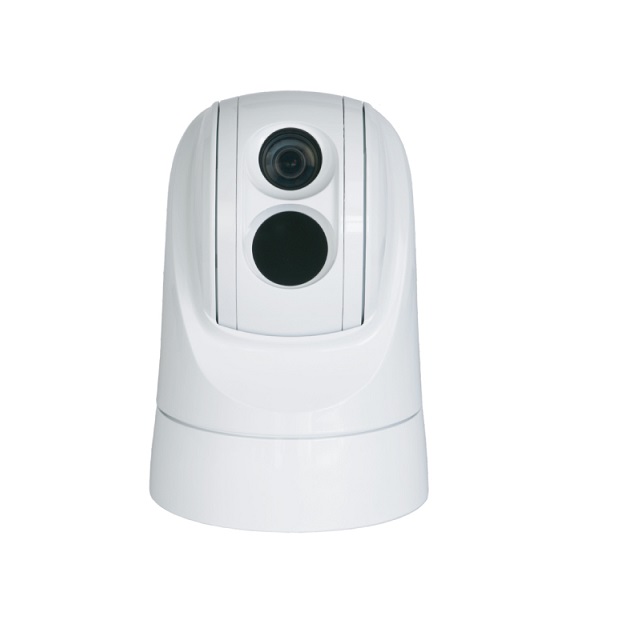
A thermal PTZ camera mixes heat detection with movement. The pan-tilt-zoom mechanism spins 360 degrees without stopping, so you can watch every part of a big ship from one mount. Optical zoom extends up to 3000mm, so you can check faraway targets in detail.
|
Specification |
Value |
|---|---|
|
Pan/Tilt Range |
360° continuous rotation |
|
Optical Zoom |
Continuous up to 3000mm focal length |
|
Operating Temperature |
-40°C to +70°C |
|
Environmental Rating |
IP68 rugged waterproof design |
Rough seas make the ship move a lot, which would ruin image quality without stabilization. Modern maritime dual PTZ camera systems use 2-axis mechanical gyro stabilization. Solid-state rate gyro sensors detect movement, and precision servos adjust the pan and tilt axes to fix it. This keeps the camera locked on a fire scene while your ship pitches and rolls.
The ZS series uses thermal imaging and 2-axis gyro stabilization technology. This gives stable images even when the ship sways and shakes. It allows clear, stable images in rough seas for safe navigation.
Winsafecctv offers thermal PTZ camera solutions built for these tough conditions. You can use them with a marine control keyboard to aim exactly when you need to check a specific heat spot.
How Thermal PTZ Cameras Improve Fire Detection
Faster Response Through Early Heat Detection
Thermal PTZ cameras give you a clear edge. They spot unusual heat rises before smoke or flames show up. This changes how you handle a fire on a ship.
A hot bearing can overheat for hours or days before it fails. A loose wire can heat up long before it sparks. Old smoke detectors only react when smoke reaches them. By then, the fire has already begun.
Thermal cameras catch the condition that starts a fire. They set off alarms at set temperature limits or heat change rates. You get a warning before visible flames exist. This early warning is vital in engine rooms and cargo holds where fires spread fast.
Think about a real case. SYTIS gave three PTZ thermal cameras to the Morro Bay Fire Department for coastal and harbor fire safety. A camera with a 100-mm lens can spot a one-meter-square fire from up to five miles away. The fire chief said the system adds a way for early fire detection and alert in open space and harbor areas. These cameras mount on water tanks, mobile trailers, and fire trucks. They give crews live thermal vision.
The marine thermal imaging system from winsafecctv offers similar features. It sees through clouds, rain, fog, and smoke. You can find fires even in poor visibility. The system works in total darkness and thick smoke where old detectors fail.
|
Detection Method |
Detection Signal |
Earliest Detection Stage |
|---|---|---|
|
Conventional Smoke Detector |
Smoke particles reaching the device |
After smoke appears and travels to detector |
|
Thermal Monitoring Camera |
Surface temperature and abnormal heat patterns |
When equipment starts heating, before smoke or flame |
The system connects to your current ship alarm panels. You can set custom heat limits for each area. This gives you a custom fire detection setup for your vessel. The maritime thermal imaging system watches critical areas all the time.
Reduced False Alarms and Enhanced Reliability
False alarms waste time and money. They also make crews less alert to real dangers. Old smoke detectors trigger false alarms from steam, dust, and exhaust. A ship's engine room has plenty of all three.
These cameras fix this problem. They use smart filtering methods to tell real fires apart from environmental factors. The system adjusts to ambient conditions, lighting, and weather.
How does this work? The camera uses time-based checks. It needs a heat signal to stay across several frames. If a hot object moves through the view briefly, the system ignores it. This filters out short events like a passing forklift or a sunbeam.
The system also checks growth and motion patterns. A real fire grows and spreads. A steam cloud or dust plume does not act the same way. AI hotspot sorting tells fire hotspots apart from normal heat sources like equipment and sunlight.
Trend analysis tracks how fast temperature changes. A slow, steady heat rise from a bearing or wire differs from a quick spike from a welding arc. The system rejects short spikes from welding and other brief sources.
The system also watches modulation patterns that match burning. This adds another layer of false alarm rejection. You can set algorithm settings for different places. An engine room setting differs from a cargo hold setting. The system adapts to each place.
Environmental adaptation features adjust detection settings based on ambient conditions. The system uses negative examples like steam, dust, and sunlight in its training. This cuts false alarm rates a lot.
The thermal camera from winsafecctv connects to your current ship alarm systems. You can watch everything from one central console using a marine control keyboard. This gives you central safety management.
Maritime Applications for Thermal PTZ Cameras
Engine Rooms and Machinery Spaces
Your engine room is the most dangerous place on a ship for fires. Fuel lines sit under high pressure. Generators give off a lot of heat. Exhaust parts get very hot every day. A marine thermal imaging system watches these parts all the time to catch early warning signs.
Think about a real test at sea. A surveyor used a thermal camera to look at two engines side by side. The port engine's heat exchanger looked dark in the thermal image. This meant coolant was not moving the right way. The starboard engine's heat exchanger glowed bright red, showing hot coolant moving well. The surveyor found the broken part right away without taking anything apart. You get this same ability with thermal PTZ cameras placed in your engine room.
The system finds overheating bearings before they stop working. It spots electrical connections that are getting hot from resistance. It catches cable insulation breaking down before short circuits happen. Each of these problems gives off a heat pattern you cannot see with your eyes.
You can set your own alarm limits for different equipment. A fuel pump running at normal heat looks different from one that is failing. The system learns these patterns and warns you only when something changes.
Cargo Holds and Open Deck Areas
Cargo holds bring special problems for fire detection. Containers stack high and block your view. Dangerous materials may heat up on their own without smoke. A maritime dual PTZ camera scans each container face for odd heat patterns.
Self-heating cargo is a quiet danger. Some chemicals and organic materials make heat as they break down. This process can go on for hours or days before flames show up. Thermal imaging catches this heat rise early, giving you time to move the container away.
Open deck monitoring covers loading work and fuel transfer spots. You can watch the whole deck from one high place. The pan-tilt-zoom feature lets you look closely at a specific container or fuel connection. During bunkering, you can watch the transfer hose and connection points for leaks that cause temperature changes.
Bad marine weather does not stop these systems. Rain, fog, and salt spray do not hurt thermal imaging performance. You keep a clear view of your deck in conditions where regular cameras fail completely.
You control everything from one central console using a marine control keyboard. Winsafecctv offers thermal PTZ camera solutions built for these tough maritime environments.
Installing and Maintaining Thermal PTZ Cameras
Strategic Placement for Optimal Coverage
Where you mount each camera decides how well it guards your ship. Use these placement rules for the best coverage:
-
Put cameras at least 4 meters above the waterline with a steep downward angle. This stops sky interference that can confuse thermal sensors.
-
Place thermal sensors parallel to the deck edge. This lets you watch vessel boundaries all the time.
-
Overlap fields of view across multiple cameras. Overlapping coverage removes blind spots where fires could start without notice.
-
Strengthen thin mounting surfaces. Hull vibration causes screen distortion that lowers detection accuracy.
Different vessel types need different setups. A frigate has extended bridge wings with a wider view, so you need fewer cameras. A smaller pilothouse requires more cameras to cover blind spots. Fixed cameras suit areas that need constant watching. Thermal PTZ cameras work best on bridges, masts, and work areas where 360-degree rotation adds value.
You can mount these systems inverted, upright, or inclined. Fast pan and tilt speeds reach 180 degrees per second. Secure mounting handles this dynamic movement without shifting. Your system can also connect with AIS and radar for target tracking.
Environmental Protection and Calibration Needs
Marine environments destroy equipment that lacks proper protection. Saltwater, humidity, and temperature swings demand rugged housings. Check these specifications before installation:
|
Requirement |
Marine Specification |
|---|---|
|
IP Rating |
IP66 or IP67 minimum; verify chemical resistance separately |
|
Housing Material |
316L stainless steel or marine-grade aluminum |
|
Additional Features |
Hardened windows, wipers, proper sealing |
|
Limitation |
IP ratings do not cover chemical resistance |
Regulatory frameworks often require DNV approval for bridge equipment. Outdoor cameras need IP66 ratings and non-corrosive materials. Aggressive washdown agents can damage units even with high IP ratings. Choose 316L stainless steel or POM materials for exposed locations.
Calibration keeps detection accurate over time. Schedule regular checks of temperature thresholds and alarm settings. Clean lenses according to a fixed protocol. Salt film builds up quickly and degrades image quality. Update software regularly to maintain detection algorithms. A marine thermal imaging system from winsafecctv includes these maintenance guidelines. You can control the entire setup from a marine control keyboard at your central console.
Thermal PTZ cameras change how ships stay safe from fires. You can see heat signs through smoke, darkness, and bad weather. This technology helps you find fires faster and cuts down on false alarms. It watches every part of your ship all the time. The system works well with safety gear you already have.
A marine thermal imaging system from winsafecctv keeps your crew and cargo safe. You run everything from a marine control keyboard at your main console. This purchase stops expensive fires before they start. The maritime dual PTZ camera watches engine rooms, cargo holds, and open decks all the time.
Shipping rules now see thermal imaging as a key safety standard. Check your current fire detection system against these new tools. Your crew should have the best protection you can get.
FAQ
How does a thermal PTZ camera see through thick smoke?
A thermal PTZ camera senses heat, not light. Smoke blocks light but does not block heat. The camera sees temperature differences between objects. This lets you see hot spots even when smoke fills the room.
Can you connect these cameras to your existing ship alarm system?
Yes. A marine thermal imaging system from winsafecctv hooks up to your current alarm panels. You can set your own temperature limits for each zone. The system sends alerts through your existing console. You control everything from one place with a marine control keyboard.
What maintenance does a maritime dual PTZ camera need?
Clean the lenses often to remove salt film. Schedule calibration checks for temperature limits and alarms. Update software to keep the detection working right. Look for corrosion on the housing. These steps keep the camera accurate over time.
How does the camera stay stable in rough seas?
The system uses 2-axis gyro stabilization. It uses sensors that detect ship movement. Servos adjust the camera to stay steady. This keeps the image locked on the target while the ship moves.
What makes winsafecctv thermal PTZ cameras different?
Winsafecctv makes cameras for tough marine environments. They have IP68 waterproof ratings and work from -40°C to +70°C. They spin 360° non-stop and zoom up to 3000mm. You get reliable performance where standard cameras would break.



 +8613725587481
 sales@winsafecctv.com