



To choose the right marine thermal imaging system, you need to focus on your specific needs and environment. Start by understanding the factors to consider, such as application, budget, resolution, sensitivity, temperature range, optics, focus, and environmental conditions. You will get the best results from a thermal imaging device that matches your vessel’s requirements. Thermal imaging helps you see through darkness, fog, and rain, which keeps your crew safe and your navigation accurate.
Key Takeaways
-
Identify your specific needs before choosing a marine thermal imaging system. Consider how you will use it for safety, navigation, or inspections.
-
Evaluate the resolution and image quality of the system. Higher resolution provides clearer images, helping you spot hazards more effectively.
-
Assess the detection range and field of view. A longer detection range is crucial for navigation, while a wider field of view enhances situational awareness.
-
Check the durability and environmental ratings of the system. Choose one that can withstand harsh marine conditions to ensure reliable performance.
-
Consider integration options with your existing navigation systems. A user-friendly interface helps you react quickly in critical situations.
Identify Your Needs and Application
Marine Use Cases Overview
You should start by thinking about how you plan to use a marine thermal imaging system. Many boaters use these systems for safety and navigation. You can detect other vessels, even if their lights are off. You can also spot people in the water, dock pilings, buoys, and markers. These features help you avoid accidents and keep your crew safe.
Some thermal imaging systems also help with maintenance and inspections. For example, you can check electrical panels or batteries for abnormal heat. You can inspect motors and bearings for signs of wear. If you own a fiberglass boat, you can use thermal imaging to find moisture or structural problems.
|
Application Type |
Description |
|---|---|
|
Recreational Boating |
Enhances visibility of vessels, people, and debris. |
|
Search and Rescue |
Locates individuals in distress or lost at sea. |
|
Law Enforcement |
Monitors marine areas for illegal activities or safety concerns. |
|
Electrical Diagnostics |
Identifies abnormal heat in electrical systems. |
|
Mechanical Diagnostics |
Assesses motors, bearings, and gears for issues. |
|
Vessel Construction |
Detects moisture and delamination in fiberglass hulls. |
Vessel and Environment Assessment
You need to consider your vessel type and the environment where you operate. A small recreational boat has different needs than a large commercial vessel. Think about the size of your boat and where you travel most often. If you sail in open water, you may need a system with a longer detection range.
Weather and environmental conditions also play a big role. Rain, fog, and atmospheric changes can affect how well a thermal imager works. Bad weather can reduce the range and clarity of images. You should choose a system that performs well in the conditions you face most often.
Tip: Always check how your chosen system handles precipitation and changing weather before you buy.
Operational Requirements
You should match the system’s technical features to your daily operations. Look for a detector with a large pixel array if you want more detail and accurate temperature readings. Higher resolution gives you clearer images and helps you communicate findings to your crew.
If you need to track moving objects, a higher refresh rate is important. The field of view matters too. A wide lens lets you see more area, while a narrow lens gives you more detail. For special tasks, like firefighting, make sure the system has proper temperature calibration.
-
Detector size and resolution affect image quality.
-
Refresh rate is key for tracking motion.
-
Field of view determines how much you can see at once.
-
Temperature calibration is vital for extreme conditions.
By understanding your use case, vessel, environment, and operational needs, you can choose a marine thermal imaging system that fits your goals.
Key Factors to Consider for Marine Thermal Imaging
Resolution and Image Quality
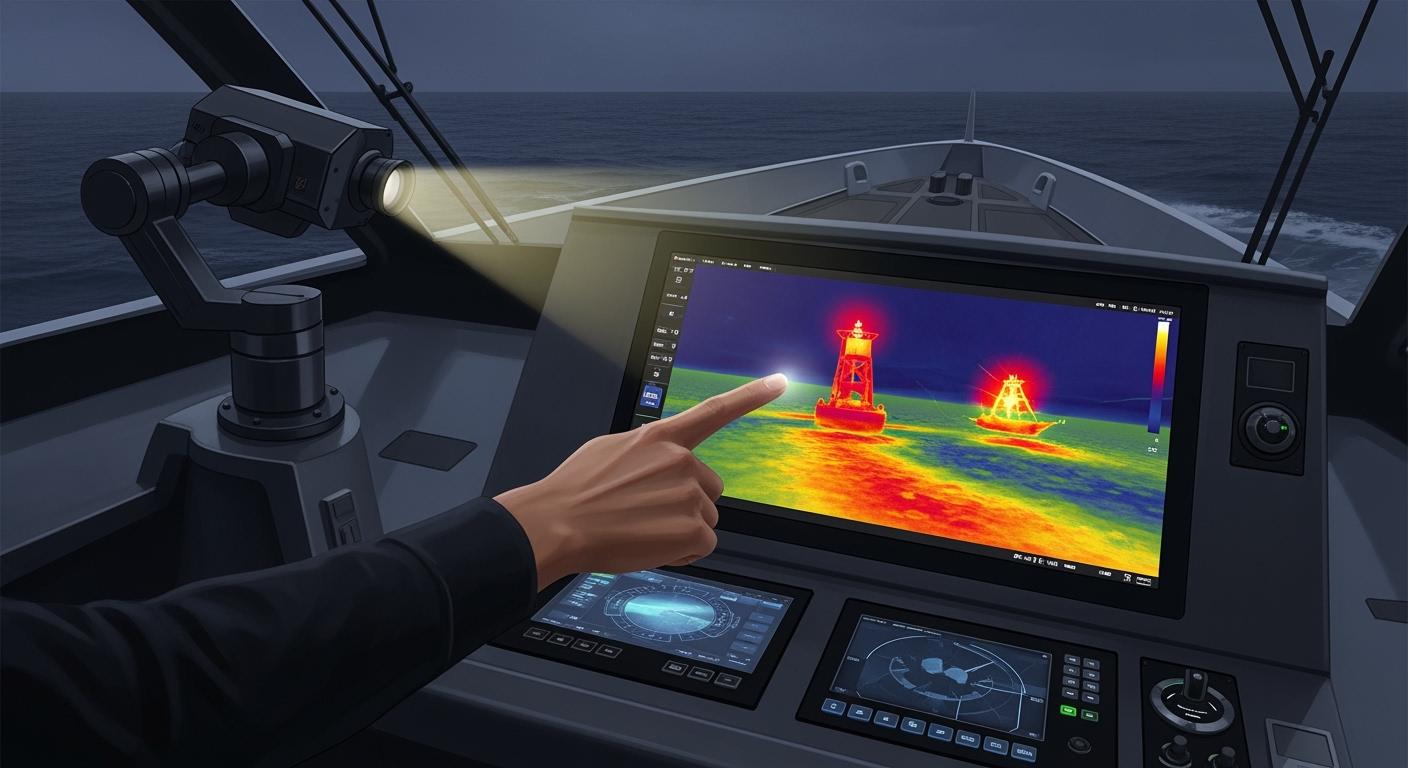
When you select a marine thermal imaging system, you should pay close attention to resolution and image quality. High image resolution and sensitivity allow you to see more detail, which is critical for spotting small objects or people in the water. Most industry-standard systems offer resolutions like 640×480, 320×240, or 160×120 pixels. A higher resolution gives you sharper images and better identification of hazards.
|
Specification |
Details |
|---|---|
|
Image Resolution |
640×480, 320×240, 160×120 |
|
Sensor Types |
MicroBolometer Thermal Sensor |
|
Zoom |
2x, 4x, 8x |
|
Autofocus |
Yes |
|
Stabilization Technology |
Rocksteady gyrostabilized option |
|
HD Output |
HD and 4K EO resolution |
You should also consider features like autofocus and image stabilization. These features help maintain image clarity, especially when your vessel moves in rough seas. If you want to monitor your surroundings with confidence, choose a system that meets or exceeds these standards.
Note: High-definition output and advanced stabilization can make a big difference in challenging marine environments.
Detection Range and Field of View
Detection range and field of view determine how much area you can monitor and how far you can see. For navigation and search and rescue, you need a thermal imaging system with a long detection range. Some advanced cameras can detect thermal signatures over 750 meters away, while visual detection can exceed 2200 meters. This range helps you spot vessels, floating debris, or people in the water before they become a threat.
A wide field of view lets you scan large areas quickly. A narrow field of view provides more detail for identifying specific targets. You should match the field of view to your typical operating environment. Open water may require a longer range, while crowded harbors benefit from a wider view.
-
Thermal imaging technology works well in low visibility, such as fog or darkness.
-
Wide field of view improves situational awareness.
-
Long detection range increases safety during navigation.
Temperature Range and Sensitivity (NETD)
The temperature range and sensitivity of your thermal imaging system affect how well you can detect objects with subtle temperature differences. NETD, or Noise Equivalent Temperature Difference, measures the smallest temperature change your camera can detect. A lower NETD means higher sensitivity, which is essential for marine thermal imaging.
NETD values below 25 mK are excellent. These systems provide clear images and reliable detection, even in poor weather. If your camera has a higher NETD, you may see grainy images and miss important details. You should always check the temperature range and NETD before making a decision.
A sensitive system helps you:
-
Detect faint heat signatures in fog, rain, or darkness.
-
Identify small temperature changes that could signal hazards.
-
Improve your thermal imaging capabilities in all conditions.
Tip: Choose a camera with a low NETD for the best performance in challenging marine environments.
Optics and Focus Options
Optics and focus options play a major role in the performance of marine thermal imaging systems. The right lens and focus settings allow you to adapt to different scenarios. Many systems offer fixed or auto focus, electronic image stabilization, and continuous optical zoom. These features help you maintain sharp images as conditions change.
|
Feature |
Specification |
|---|---|
|
Field of view (FOV) |
48° × 37° |
|
Focus |
Fixed or Auto |
|
Detector type |
Focal Plane Array (FPA) |
|
Spectral range |
7.5–13 μm |
Some advanced systems include turbulence mitigation, edge enhancement, and contrast enhancement. These features improve image clarity and help you spot hazards faster. If you operate in rough seas, look for coated, hardened lenses and gyro-stabilization to keep your images steady.
Durability and Environmental Suitability
Marine environments are harsh. Saltwater, humidity, and extreme weather can damage sensitive electronics. You should choose a thermal imaging system with a high IP rating, such as IP67 or IP68. These ratings mean the device is dust-tight and can withstand immersion in water.
|
IP Rating |
Solid Protection |
Liquid Protection |
Typical Use Case |
|---|---|---|---|
|
IP67 |
Dust-tight |
Immersion up to 1 meter |
Outdoor cameras, field sensors |
|
IP68 |
Dust-tight |
Prolonged immersion |
Submersible, marine systems |
Modern thermal imaging systems also include features for low light performance, fog and smoke capability, and active gyro-stabilization. These features ensure your system works reliably in all conditions, from bright sunlight to heavy rain.
Callout: Always verify the durability and environmental ratings before installing a system on your vessel.
Integration and Controls
Integration and connectivity are essential for getting the most out of your thermal imaging capabilities. Many systems allow you to display thermal images directly on your navigation displays. This integration helps you spot hazards that radar might miss. Some systems combine thermal and visual cameras, giving you multiple perspectives on a single screen.
|
Integration Option |
Description |
|---|---|
|
Thermal Images on Navigation Displays |
View thermal images directly on navigation displays to spot hazards not visible on radar. |
|
Infrared-Enhanced Searchlights |
Automatically adjust to areas with detectable heat sources, improving safety and efficiency. |
|
Fixed-Mount Thermal Imagers with Visual Camera |
Combines visual and thermal perspectives on a chartplotter or multifunction display. |
User-friendly controls make a big difference in stressful situations. Look for systems with intuitive interfaces, such as touchscreen controls, rotary knobs, or dedicated joysticks. These controls let you move, zoom, and adjust the camera quickly. You can also switch between thermal and visible-light modes, adjust color palettes, and enable image stabilization for clearer viewing.
Tip: A well-designed display and user interface helps you react faster and stay safe, especially at night or in fog.
By considering these key factors—resolution, detection range, temperature range, optics, durability, and integration—you can choose a marine thermal imaging system that matches your needs and keeps your crew safe.
Types of Marine Thermal Imaging Systems
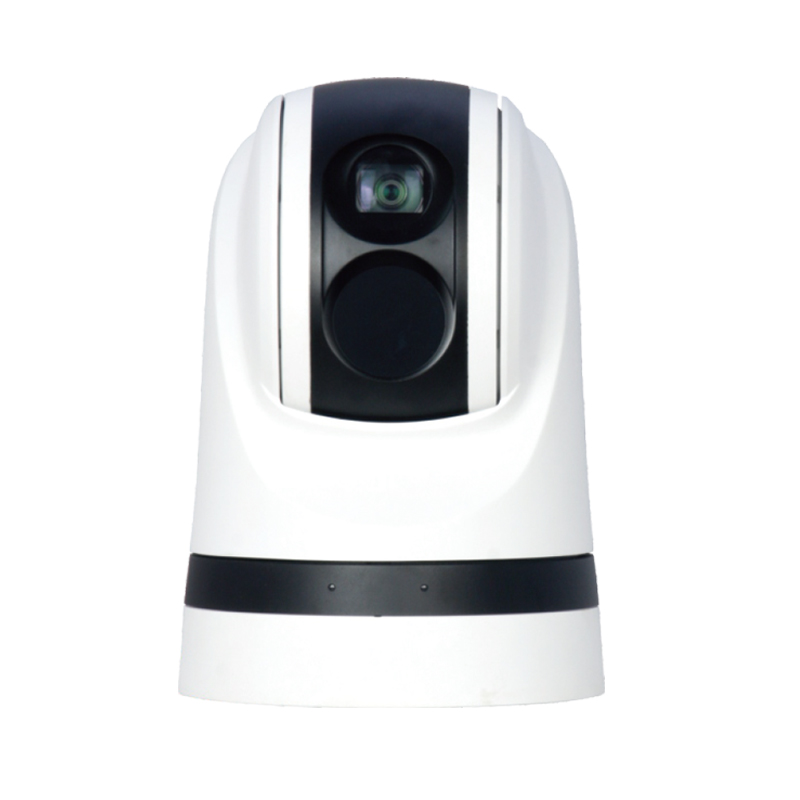
Choosing the right camera system for your vessel starts with understanding the main types of marine thermal imaging cameras. Each type offers unique benefits for different boating needs.
Handheld Thermal Imaging Devices
Handheld thermal imaging cameras give you maximum flexibility. You can use them anywhere on your boat or even take them ashore. These devices work well for quick inspections, spotting people overboard, or checking for hot spots in equipment. You do not need to install them, so you can share one device between several boats. Handheld models suit smaller vessels or users who value portability and durability.
Pros:
-
Easy to use and carry
-
No installation required
-
Lower cost
Cons:
-
Less stable in rough seas
-
Shorter detection range
-
Limited integration with other systems
Fixed-Mount Cameras
Fixed-mount thermal imaging cameras attach to your boat’s hardtop or mast. This camera system provides continuous monitoring and is ideal for serious night navigation or larger vessels. You can connect these cameras to your navigation displays for real-time viewing. Fixed-mount options deliver higher stability and better long-range performance.
Pros:
-
High stability, even in rough water
-
Integrates with navigation systems
-
Excellent for long-range detection
Cons:
-
Requires installation
-
Less flexible than handheld devices
-
Higher power consumption
Pan-Tilt and Multi-Sensor Systems
Pan-tilt camera systems let you remotely control the direction and zoom of your thermal imaging cameras. Multi-sensor models combine thermal and visible-light cameras in one unit. You can use these systems for wide area surveillance, search and rescue, or inspections. Pan-tilt features help you cover large areas without moving the vessel.
Pros:
-
Wide area coverage
-
Remote control for precise viewing
-
Combines multiple sensors for more information
Cons:
-
More complex installation
-
Higher cost
-
Needs technical expertise
|
Type |
Description |
|---|---|
|
Fixed-mount |
Installed on structures like hardtops or masts, ideal for serious night navigation and larger boats. |
|
Handheld |
Portable and versatile, usable from various locations without permanent installation. |
|
Pan-and-tilt |
Remotely controlled for wide area coverage, suitable for surveillance and inspections. |
Portable vs Permanent Installations
When you compare portable and permanent camera system installations, you need to think about your boating style and vessel size.
-
Portable systems, such as handheld thermal imaging cameras, offer easy setup and lower power use. You can move them between boats and use them right out of the box.
-
Permanent installations, like fixed-mount or pan-tilt camera systems, provide better stability and clearer images in harsh weather. These systems excel in fog, rain, and rough seas.
|
Feature |
Portable Systems |
Permanent Installations |
|---|---|---|
|
Installation Ease |
Easy to install |
Requires more effort and planning |
|
Power Consumption |
Lower power draw |
Higher power requirements |
|
User-Friendliness |
Plug and play, minimal adjustments |
May require technical expertise |
|
Stability |
Less stable, can be affected by movement |
High stability, better for long-range use |
|
Performance in Adverse Weather |
Struggles in fog and rain |
Excels in harsh conditions |
Tip: If you want the best performance in challenging conditions, choose a permanent camera system. For maximum flexibility, a portable thermal imaging camera may suit your needs.
Buying Guide: Marine Thermal Imaging System
Matching Features to Needs
You should always match the features of a marine thermal imaging system to your vessel’s requirements. Start by thinking about how you will use the system. Consider these important points:
-
Mounting style matters. Fixed-mount cameras work well for helm integration. Handheld models offer portability.
-
Higher resolution gives you more detail and helps you recognize objects quickly.
-
A wide field of view improves close-range awareness. A narrow view helps you spot distant objects.
-
Make sure your display is compatible with your chosen system.
-
Some systems combine thermal and visual imaging for better context.
-
Water resistance is essential for marine use.
-
Battery life should meet your needs, especially for handheld or smartphone-connected devices.
Comparing System Types
You can compare different types of marine thermal imaging system options using key criteria. The table below highlights what to look for:
|
Criteria |
Description |
|---|---|
|
Sensor Resolution |
Higher resolution provides finer detail and clarity in images. |
|
Thermal Sensitivity (NETD) |
Lower values mean better detection of subtle heat signatures. |
|
Lens Characteristics |
Larger lenses improve long-range observation and field of view. |
|
Operational Features |
Color palettes and user interface can enhance usability in different environments. |
Evaluating Specs and Demos
You should always review technical specifications and request a demo before making a decision. Check the image resolution, thermal sensitivity, and battery life. Test the user interface to see if it feels intuitive. Try the system in low-light or foggy conditions if possible. A hands-on demo helps you understand how the thermal imaging system performs on your vessel.
Tip: Bring your own display or chartplotter to the demo to check compatibility.
Making the Final Choice
Follow these steps to make a confident purchase:
-
Define the main purpose for your marine thermal imaging system.
-
Set your budget to narrow down choices.
-
Evaluate image resolution and sensitivity for your needs.
-
Choose a thermal range that fits your application.
-
Assess portability and durability for your environment.
-
Check battery life for extended use.
-
Look for a user-friendly display and controls.
-
Examine integration with your current equipment.
-
Research brand reputation and support.
A clear buying guide helps you select the right thermal imaging system for your vessel and ensures you get the features you need.
Additional Considerations Before Purchase
Budget and Cost of Ownership
You should set a clear budget before you invest in thermal imaging for your vessel. The price of thermal imaging systems can range from a few hundred to several thousand dollars. Handheld models usually cost less, while fixed-mount or pan-tilt systems require a larger investment. You must also consider the long-term cost of ownership. This includes maintenance, repairs, and possible upgrades. Some systems need regular calibration or replacement parts. You may also need to pay for software updates or integration with other electronics. A higher initial price can sometimes mean lower costs over time if the system lasts longer and needs less service.
Tip: Factor in both the purchase price and ongoing expenses when you compare thermal imaging solutions.
Brand, Warranty, and Support
You should research the reputation of each brand before you make a decision. Leading brands often provide better reliability and customer service. Warranty and support options can vary, so you need to check what each manufacturer offers. The table below shows common warranty types and durations for marine thermal imaging products:
|
Warranty Type |
Duration |
Description |
|---|---|---|
|
1-Year Cooled Sensor Limited Warranty |
1 year |
Covers defects in materials and workmanship for cooled sensor products. |
|
2-Year Standard Limited Warranty |
2 years |
General warranty covering standard marine thermal imaging products. |
|
3-Year Extended Limited Warranty |
3 years |
Extended coverage for additional peace of mind beyond the standard warranty period. |
A longer warranty can give you peace of mind. You should also look for brands that offer strong technical support and easy access to replacement parts. Good support can help you solve problems quickly and keep your thermal imaging system running smoothly.
Compliance and Regulations
You must make sure your thermal imaging system meets all local and international regulations. Some countries have rules about the export, use, or installation of thermal imaging equipment. You may need to follow specific standards for safety or electromagnetic compatibility. Commercial vessels often have stricter requirements than recreational boats. Always check with your local maritime authority or a trusted dealer before you buy. This step helps you avoid legal issues and ensures your thermal imaging system works as intended.
Note: Compliance protects you from fines and keeps your vessel safe and legal.
You can make a smart choice by matching thermal imaging features to your vessel and budget. Use the table below to focus on what matters most when selecting a thermal imaging system:
|
Feature |
Description |
|---|---|
|
Rugged, waterproof construction |
Designed to withstand harsh marine environments, ensuring durability. |
|
Simple integration |
Easily mounts on existing boats with standard power and output options. |
|
Mobile compatibility |
Allows streaming of thermal video to various devices for convenience. |
|
AI-enhanced options |
Provides advanced object detection for improved safety and navigation. |
Thermal imaging helps you stay safe in tough conditions. Always test thermal imaging systems before you buy. Consulting thermal imaging experts gives you insights about your application and helps you avoid problems. You can trust this guide to help you choose the right thermal imaging solution for your needs.
Requesting a demo lets you see how thermal imaging performs on your vessel.
FAQ
What is the main advantage of marine thermal imaging over traditional night vision?
You can see through darkness, fog, and smoke. Thermal imaging detects heat, not light. This gives you clear images when night vision fails.
How do you maintain a marine thermal imaging system?
You should clean the lens with a soft cloth. Check for water damage regularly. Update software when available. Store handheld devices in a dry place.
Can you use thermal imaging for search and rescue?
Yes. You can spot people in the water, even in low visibility. Thermal imaging helps you locate heat signatures quickly during emergencies.
What is the typical lifespan of a marine thermal imaging camera?
Most marine thermal imaging cameras last 5 to 10 years. You can extend lifespan with proper care and regular maintenance.
How do you choose between handheld and fixed-mount systems?
Use handheld devices for flexibility and quick checks. Choose fixed-mount systems for continuous monitoring and integration with navigation displays.



 +8613725587481
 sales@winsafecctv.com